
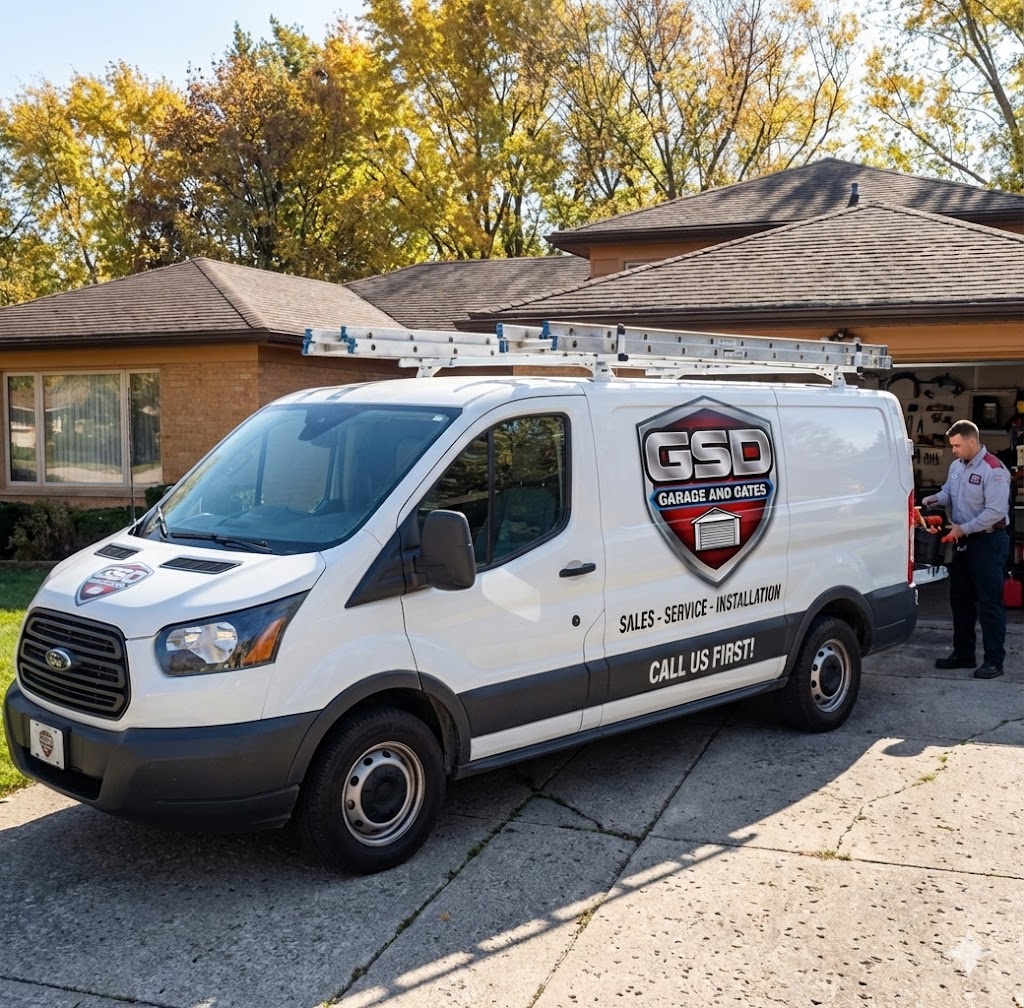
Ignoring a garage door emergency does not keep the problem small. It lets it spread. In our experience serving homeowners across Twinsburg, OH and the surrounding communities, the most expensive calls we respond to are rarely the ones where something failed without warning. They are the ones where a homeowner noticed something wrong, decided to wait, and called us weeks later to find that one failing component had quietly destroyed two or three others. What started as a single repair becomes a multi-component replacement. What started as a manageable cost becomes a significant one.
This guide covers what happens when a garage door emergency is left unaddressed and what to do next.
Why Garage Door Emergencies Do Not Fix Themselves
A garage door system operates as a single interconnected unit under constant mechanical load. Springs counterbalance the weight of the door so the opener does not carry it alone. Cables transfer that spring tension to the drum and keep the door traveling evenly on both sides. Every component depends on the others working correctly.
When one part fails, the remaining parts absorb the extra load. Unlike a leaking faucet that drips at a steady rate, a compromised garage door system gets worse with every operation. Each time the door runs after a component fails, the surrounding parts take on more stress than they were designed to handle. We have seen a broken spring ignored for two weeks turn into a snapped cable, a bent track bracket, and a burned-out opener motor, all from a problem that would have been a straightforward spring replacement on day one.
The Opener Motor Burns Out Faster Than You Expect
One of the most common secondary failures we diagnose is a burned-out opener motor on a door that lost a spring weeks earlier. The homeowner heard the bang when the spring snapped, noticed the door was harder to lift, and kept using the opener because it still seemed to work. By the time we arrived, the motor was gone.
A standard two-car steel garage door can weigh more than 200 pounds. Torsion springs counterbalance that weight so the opener only manages a fraction of the load under normal conditions. Most residential opener motors are rated to lift between 100 and 150 pounds under spring-assisted conditions. When the spring fails and the opener continues to run, the motor lifts the full unassisted door weight on every cycle. Under that overload, the motor winding can burn out in as few as 10 to 20 additional cycles.
What would have been a spring replacement becomes a spring replacement plus an opener replacement, and the cost difference is significant.
A Broken Cable Turns Into an Off-Track Door
Garage door cables work in a paired system. One cable runs on each side of the door, connecting the bottom bracket to the drum at the top of the track. When both are intact and tensioned correctly, the door travels straight and level. When one cable frays or snaps, the door loses balanced travel. One side drops lower, the rollers take on lateral stress they were not designed to absorb, and the door begins to bind against the track.
In northeast Ohio, this progression moves faster in winter. Cold temperatures cause metal components to contract, accelerating wear on stressed cable strands and roller bearings. A cable fraying in October often snaps by December.
When ignored, the misalignment worsens until the rollers jump the track. The repair is no longer just a cable replacement. The track bracket is often bent, the rollers are damaged, and in some cases the door panel has been scored where it contacted the track. The original cable repair would have cost a fraction of what it takes to restore everything at that stage.
A Stuck Door Leaves Your Home Exposed
A garage door that will not close is an immediate security and safety emergency. The garage is typically the largest entry point into a home and connects directly to the interior living space. When stuck open, that entire entry point is unprotected.
We have responded to calls from homeowners who went to bed with the door stuck open because they did not want to deal with it that night. We have also responded to homeowners whose car was trapped inside a door that would not open, leaving them without transportation until a technician arrived. Both situations share the same root cause. A problem that felt manageable became significantly more disruptive because the call did not come soon enough.
A door that will not close is not a problem to address in the morning. It is a problem to address immediately.
Damaged Panels Lead to Structural Failure Over Time
A bent or cracked panel rarely looks serious from the driveway. The door still moves and closes. What is not visible is the stress the damaged panel places on the hinge points, roller brackets, and track alignment on either side.
Garage door panels distribute load evenly across the full width of the door. When a panel is bent, that distribution is disrupted. The hinges on either side carry more flex stress on every cycle than they were built for. In northeast Ohio, temperature swings between winter lows and summer highs can exceed 80 degrees Fahrenheit. That thermal cycling accelerates stress fractures in already-compromised metal. A panel that looks like cosmetic damage in October can become a structural failure by March.
By the time the hinge cracks or the track shifts, the repair has grown from a panel replacement into a track realignment and hardware replacement.
The Safety Risk to People and Pets Grows With Every Use
A garage door operating with a broken spring, frayed cable, or misaligned track is a physical danger to anyone nearby. A door that loses cable tension on one side can drop several inches instantly before the opener brake engages. A door partially off its track can come down unevenly, bypassing the safety sensor because the beam is still clear even though the door is not traveling safely.
Children and pets are especially vulnerable. They move unpredictably near the door and may not recognize warning signs. A door that closes on an obstruction should reverse automatically, but a door with a broken spring or off-track condition may not reverse reliably.
The moment a garage door shows signs of a mechanical emergency, it should not be operated again until a trained technician has inspected and repaired the system. The risk increases with every cycle.
The Cost of Waiting Almost Always Exceeds the Cost of Acting
Every day a garage door emergency goes unaddressed, the repair scope grows. A torsion spring replacement on day one is a single line on an invoice. That same spring replacement on day fourteen, after the opener motor has burned out and the cable has snapped, becomes three separate repairs. Labor, parts, and time all multiply when components fail in sequence.
Our team is straightforward about this. We tell homeowners what we see and what it will cost before any work begins. Homeowners who called the same day their emergency appeared consistently paid less, had their door back faster, and avoided the secondary damage that made things worse for those who waited.
Acting on an emergency the day it appears is almost always the lower-cost decision.
What to Do the Moment You Spot a Garage Door Emergency
Stop using the door immediately. Do not run the opener through additional cycles. Do not manually force the door open or closed. Do not lift the door by hand if a spring has broken, because without counterbalance the full unassisted weight can drop without warning.
Keep family members and pets away from the door and the area beneath it. If the door is stuck open, use the interior entry door between the garage and the house as your primary security measure until the repair is complete.
Then call for same-day professional service. At GSD Garage & Gates, every emergency call begins with a full 21-point safety inspection covering the springs, cables, drums, hinges, rollers, tracks, opener performance, and overall door condition. We do not just fix the visible problem. We check the entire system before we leave.
Get Emergency Garage Door Repair From GSD Garage & Gates
If your garage door is showing signs of an emergency, stop using it and make the call now. GSD Garage & Gates is a locally owned, family-operated company with 15 years of industry experience serving homeowners in Twinsburg, OH and surrounding communities including Chagrin Falls, Pepper Pike, Beachwood, Gates Mills, and Moreland Hills.
We often provide same-day service and can have a technician at your home within two to three hours. Emergency calls are handled as early as 5 AM and our team is available seven days a week. Every visit includes our full 21-point safety inspection at no extra charge. Reach out to GSD Garage & Gates today before a single-component problem becomes a multi-component replacement.